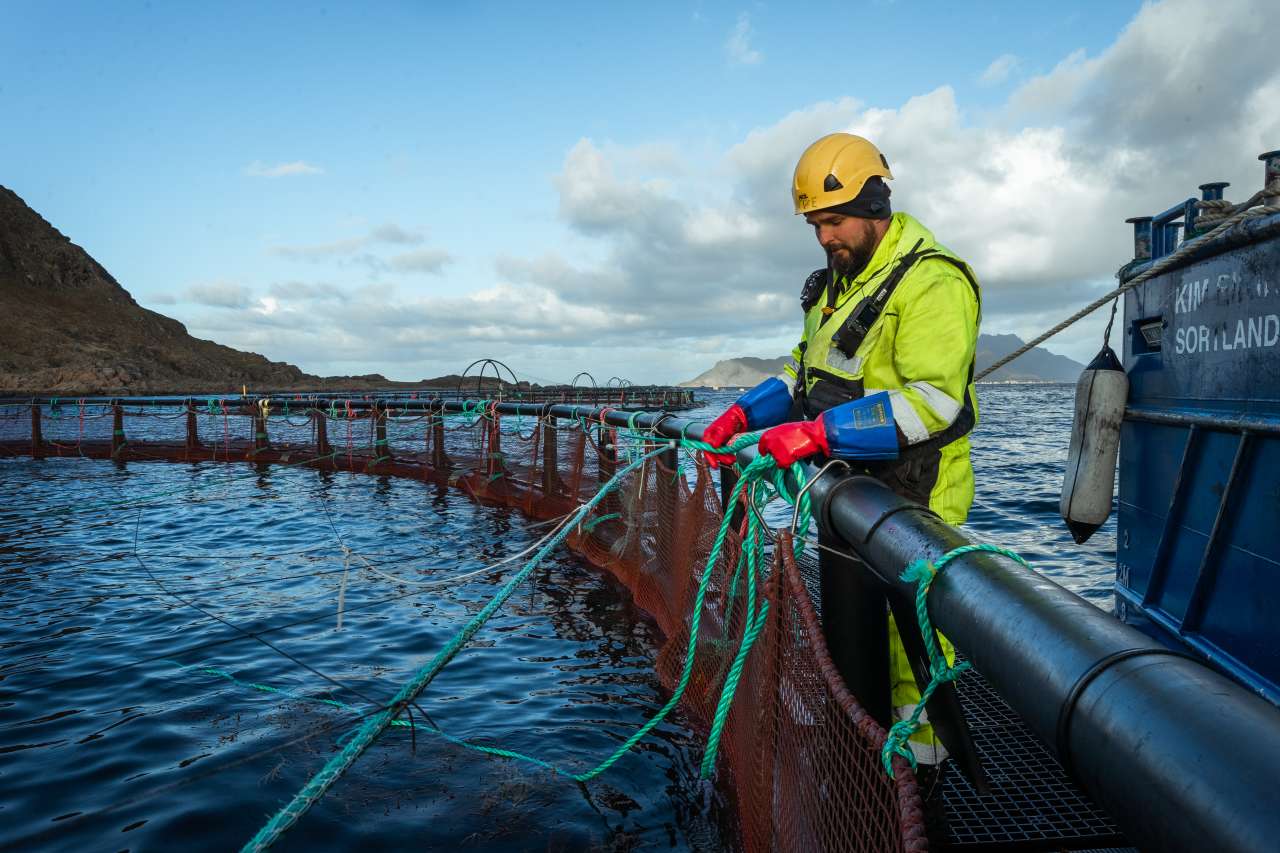

They do most things themselves and focus on keeping the knowledge inside the company
55 full-time positions are split 50/50 between sea and land. Egil Kristoffersen and Sons has its own slaughterhouse as well as 14 employees at Nordland Akva, which produces smolt.
The people who work at the company are largely locally connected, but at the slaughterhouse, for example, there are quite a few people who have moved to Bø. In fact, there are people from 11 different nationalities there — German, Russian, Korean and Filipino, in addition to Norwegians.
We try to put the workday together so that everyone gets to do something that suits them. People need responsibility — we place great trust in them. When they are given responsibility and can plan their own day, it becomes more pleasant and they feel more ownership. - Leif Nikolai Pedersen, Operations Manager

Eva Maria explains that being independent — keeping the knowledge within the company — is very important. They do not want to depend on individual people.
We are located in a remote area, so it is important to be independent. It is part of the culture and tradition here to be independent, because the distances are so great. - Eva Maria Kristoffersen, Managing Director
At Egil Kristoffersen and Sons, they repair nets and other equipment themselves. Having control of quality — making sure not even a single thread is too weak — is important. A big advantage is that this know-how is valuable when carrying out operations at the pen edge, and it also gives them control over rope and netting that can be sent into a recycling chain.

Being able to mend a net, stitch together a delousing net, splice rope and moorings — that is a huge strength for the company. - Leif Nikolai Pedersen, Operations Manager
Avoiding fish escapes through strong routines for inspections and facility checks
The salmon and facilities at Egil Kristoffersen and Sons are frequently inspected — daily, weekly, monthly and yearly. Scheduled and planned inspections are ready to be signed off in Selstadloggen, where they log documentation of any deviations with text, images and video.
For the daily plan — for example if knots appear on a rope — it is perfect to use underwater drones to film and see. It is a unique opportunity to look a little deeper than what you can see from the surface. You cover much more. - Jo Vegard Engen, Operations Officer
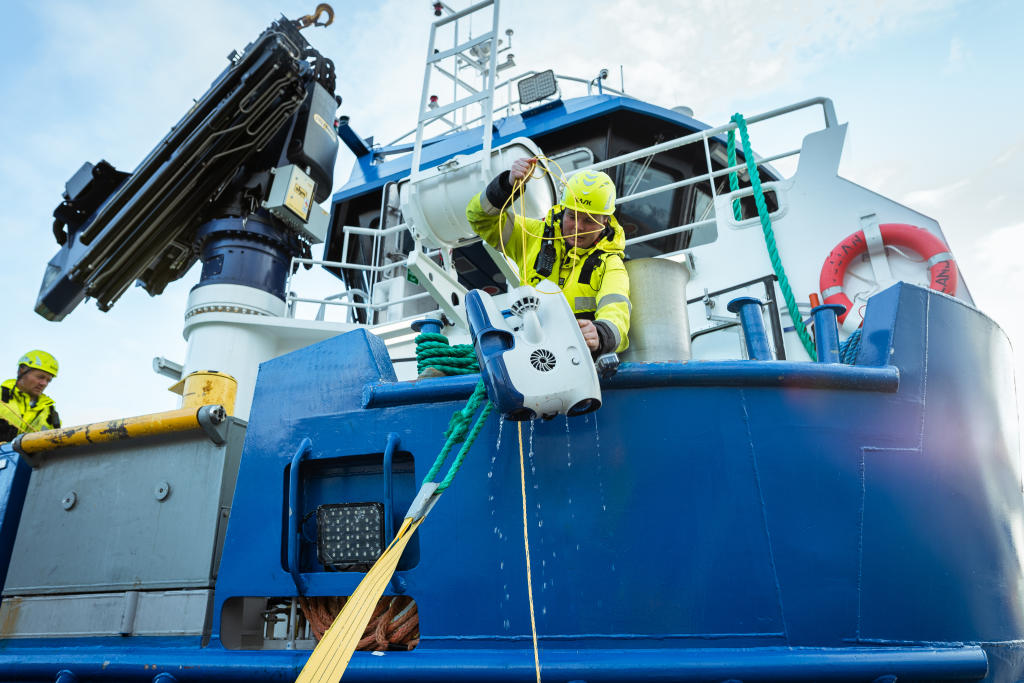
During the daily inspection at the fish farms, buoys, ropes, jump nets and other equipment at the pen edge are all checked to make sure everything is in place and working as it should. The point is that the facility must be able to withstand bad weather arriving overnight. The fish are fed and counted for lice. Dead fish are removed and ground up. Before the fish farmers leave the site for the day, they look over the feeding once more, check that the fish are doing well and that the facility is intact.
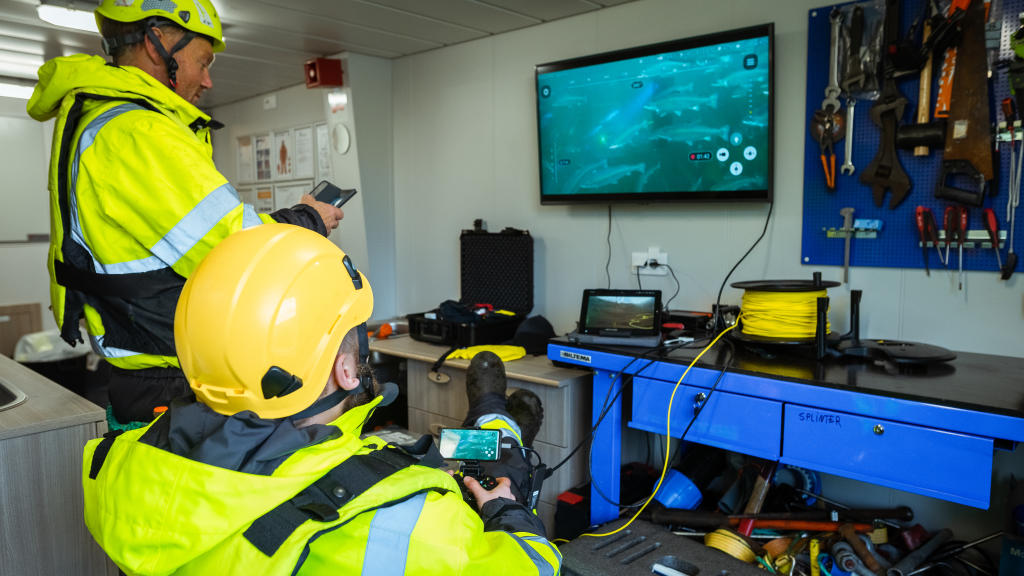
In the Norwegian Directorate of Fisheries' experience database you can read more about the causes of fish escapes. Many of the explanations for escapes relate to the handling of dead-fish scoops, rope, netting and other underwater equipment that causes holes and damage.
With regular underwater inspections and an extra eye under water during operations in the pen, Egil Kristoffersen and Sons manage to spot deviations before any potentially large-scale damage can occur.
On the question of fish escapes, no one can ever say with 100% certainty that they have not had a single escaped fish. But in the escape statistics of the Norwegian Directorate of Fisheries (which go all the way back to 2006), there is not a single reported escape from the facilities of Egil Kristoffersen and Sons. There is good reason to believe that their solid routines for monitoring and inspection are what keep escapes low — or non-existent.
Happy fish makes happy people
At Egil Kristoffersen and Sons, good fish health starts with having their own smolt facility, where they control which pathogens come in with the roe — and preferably know it is pathogen-free. They screen the roe before it is put in, and they test throughout the fish's entire lifecycle for disease. To minimise salmon lice they use lice lasers, and they have their own biological controller.
When our fish are doing well, our people are doing well. That really applies to the whole chain, from stocking the smolt to the moment they are slaughtered at the processing plant. So it is a value we hold high — fish welfare. Low mortality and producing a quality product are important to us, because it is the only competitive advantage we have. - Eva Maria Kristoffersen, Managing Director

The future of fish farming is green
If we ask Eva Maria what the future of the fish farming industry looks like, she is clear that it will be greener. Diesel consumption will be reduced, and the raw materials for fish feed — which today come from Brazilian soy — will be replaced by Norwegian algae production, cellulose or insect meal. They have already taken part in an innovation project where sludge from the fish farm was used to farm soldier flies.
Eva Maria is quite right that a greener future for the fish farming industry is being pursued. The Grønn Plattform programme recently granted 120 million NOK to the ZeroKyst project, which will, among other things, demonstrate solutions for hydrogen-electric vessels and mobile energy supply for fisheries and aquaculture.


